

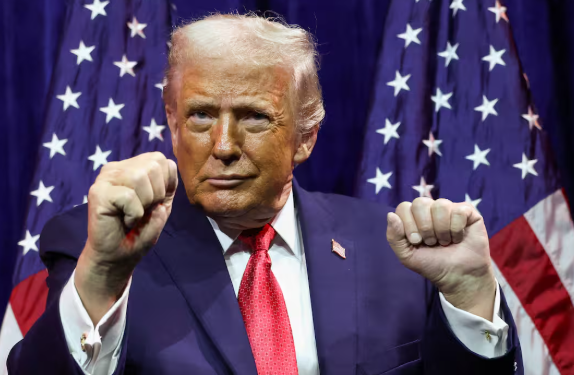
The financial markets are currently absorbing a major legal and economic development. On Friday, the Supreme Court ruled that President Trump’s global tariffs are illegal. The decision officially rejects the administration’s use of emergency powers to impose broad trade duties on international goods.
This ruling effectively brings an end to a signature White House trade policy that had remained active during the lengthy litigation process. Because international trade policies are deeply intertwined with inflation, currency valuation, and corporate profitability, the news has immediate implications for various asset classes.
This article explores what happens when the Supreme Court strikes down tariffs, focusing strictly on the macroeconomic data and historical market mechanics regarding cryptocurrencies and traditional equities.
The Ruling: A Shift in Global Trade Policy
The administration had previously justified the sweeping trade duties by declaring national emergencies, explicitly citing the fentanyl crisis and persistent international trade deficits. The tariffs were expansive, covering imports from major trading partners including Canada, China, Mexico, and nearly all other nations.
According to projections, these duties were expected to raise approximately $1.5 trillion over a decade. However, lawsuits challenging the policy argued that these tariffs functioned as unauthorized taxes on the American public. Lower courts largely agreed with this assessment before the Supreme Court made its final ruling.
By removing these duties, the government is now facing a sudden shift in fiscal projections. Analysts note that scrapping these tariffs instantly creates an estimated budget gap of $133 billion to $140 billion. This sudden revenue shortfall introduces new variables into the macroeconomic landscape.
Impact on Cryptocurrency and Bitcoin Markets
When assessing how digital assets react after the Supreme Court strikes down tariffs, analysts look at a mix of potential deflationary tailwinds and fiscal uncertainty. The macroeconomic consensus points to a mixed environment for Bitcoin and the broader cryptocurrency market.
Potential Deflationary Tailwinds
The removal of global tariffs can alter domestic pricing structures. Specifically, it can lead to:
- Reduced Import Costs: Without heavy tariffs, the cost of bringing goods into the country decreases.
- Lower Inflationary Pressure: Cheaper imports generally translate to lower consumer prices, pushing down overall inflation metrics.
- Adjusted Interest Rate Expectations: When inflation cools, central banks face less pressure to implement or maintain aggressive interest rate hikes. A lower interest rate environment is historically favorable for risk-on assets, including Bitcoin, as borrowing becomes cheaper and liquidity increases in the financial system.
The US Dollar Equation
The sudden emergence of a $133 billion to $140 billion budget gap introduces uncertainty regarding federal finances.
- Dollar Weakness: Fiscal uncertainty can lead to a weaker US dollar in the short term.
- Bitcoin Correlation: Because Bitcoin is globally priced in US dollars, a weakening dollar often acts as a positive historical catalyst for the digital asset.
Volatility and Fragile Risk Sentiment
Despite the potential benefits of lower inflation, the cryptocurrency market remains highly sensitive to macroeconomic instability.
- Market Uncertainty: The unexpected budget shortfall creates questions surrounding state finances and broader market liquidity.
- Historical Swings: Market data shows that previous legal developments regarding these tariffs resulted in sharp price swings for Bitcoin. In the short term, the heightened uncertainty generally translates to elevated volatility across all digital asset pairs.
Impact on the Traditional Stock Market
For traditional equities, the scenario where the Supreme Court strikes down tariffs presents a slightly different set of variables. Market analysts currently view the development as mildly positive for the medium term, though not without short-term hurdles.
Margin Expansion for Multinationals
The most immediate benefit for publicly traded companies lies in supply chain economics.
- Higher Profit Margins: With import taxes removed, companies that rely heavily on foreign materials and manufacturing will see their cost of goods sold decrease. This directly expands corporate profit margins.
- Reduced Trade Tensions: The rollback of a global tariff regime typically de-escalates international trade disputes. This creates a more stable operating environment for multinational corporations heavily weighted in major stock indices.
Bond Yield Risks and Market Volatility
Conversely, the primary headwind for the stock market stems from the aforementioned federal budget gap.
- Rising Bond Yields: To cover the $133 billion to $140 billion revenue shortfall, the government may need to issue more debt. This can lead to higher bond yields. When bond yields rise, they often exert downward pressure on stock valuations, as safer government debt becomes more attractive to institutional capital.
- Policy Shift Turbulence: Large-scale, sudden changes to national economic policy reliably trigger short-term market volatility as institutional investors rebalance their portfolios to account for new margin projections and debt realities.
Summary of Market Implications
The removal of global trade duties introduces a complex web of economic reactions. Based on the data, the macroeconomic outlook can be summarized as follows:
- Cryptocurrency / Bitcoin: The outlook is mixed to slightly negative in the immediate short term due to an expected spike in volatility and fragile risk sentiment. However, the underlying mechanics of lower inflation and a potentially weaker dollar provide structural support.
- Stock Market: The outlook leans slightly positive on a medium-term horizon due to anticipated corporate margin expansion, though investors should expect near-term volatility driven by rising bond yield risks and fiscal uncertainty.
Disclaimer: This article is for informational purposes only and does not constitute financial, investment, or trading advice. Financial markets, particularly digital assets, are highly volatile. Readers should conduct their own research and consult with a licensed financial advisor before making any investment decisions.
⚠️ RISK WARNING & AI DISCLOSURE
- This information is generated by Artificial Intelligence (AI) and complex algorithms. While advanced, these systems can contain errors or inaccuracies and are for educational purposes only.
- Technical analysis provides no guarantees; this information is purely informative.
- All discussed scenarios are hypothetical and do not constitute predictions or expectations.
- Past performance is not an indicator of future results.
- This is not financial advice and is not intended as a call-to-action for the reader.
- No implicit direction is claimed, and no specific behavior of market participants is suggested.